
The Skills I Learned as a Kid That Still Power My Career
How Early Computer Skills Shaped My Engineering Career
The skills I developed long before earning my Mechanical Engineering degree have turned out to be some of the most valuable tools in my career. I see them show up in nearly every role I’ve had, and they continue to shape the work I do today at Niche 3D.
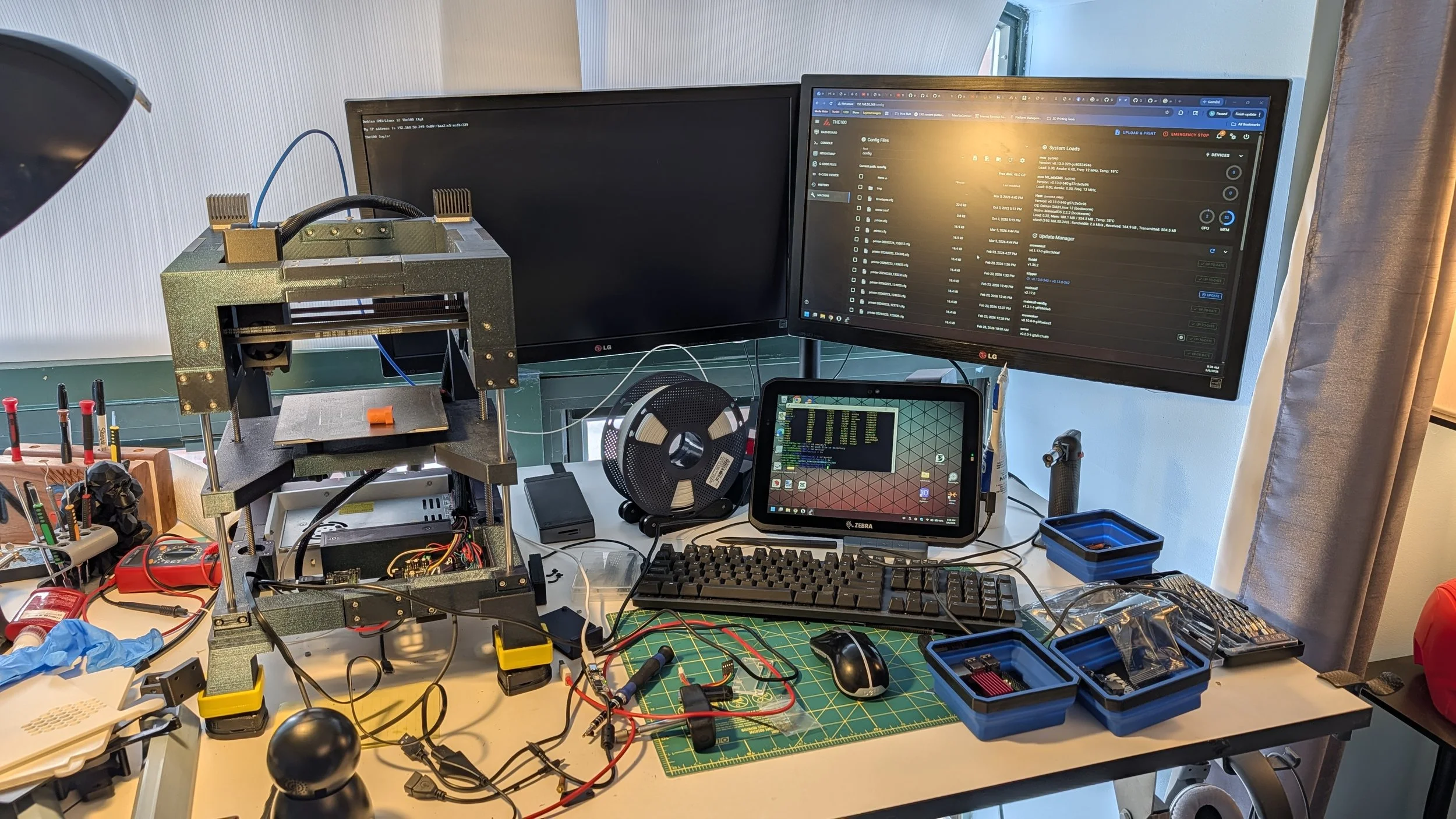
Most of those early skills revolved around computers — troubleshooting IT issues, experimenting with Linux, learning to program, and generally taking things apart to understand how they worked. What started as curiosity eventually became a toolkit that I now rely on when solving engineering problems, working with 3D printers, and improving workflows.
Building Problem-Solving Skills Through IT
Some of my earliest technical experience came from working with computers and helping solve IT problems during high school and college. That environment naturally teaches you how to think through problems: identify the issue, isolate variables, test solutions, and adapt when something doesn’t work the first time.
That same mindset applies directly to engineering. In smaller companies especially, roles tend to overlap, and having strong troubleshooting skills outside of traditional engineering can make a big difference. Being comfortable digging into system issues, automating tasks, or fixing infrastructure problems has often helped me keep projects moving forward more efficiently.
Learning Linux by Breaking Things (and Fixing Them)
My experience with Linux started on an old family computer that got handed down to me. It originally ran Windows XP and possibly shipped with an even earlier version of Windows. I was looking for ways to improve performance and quickly discovered the world of lightweight Linux distributions. From there, I spent a lot of time installing, tweaking, and occasionally breaking different systems just to see what I could learn.
Working with Linux taught me how to navigate command-line interfaces, edit configuration files, and troubleshoot systems at a deeper level. Those skills carry over directly into modern engineering work. In my career I’ve used Linux to manage virtual machines, automate tasks, and run firmware-based systems for 3D printers. What began as experimentation has become an essential part of my workflow.
Programming and Systems Thinking
Programming was another skill that helped shape how I approach technical problems. Through robotics programs in middle and high school, and AP Computer Science, I started to see how complex problems could be broken into smaller logical pieces.
That way of thinking maps surprisingly well to additive manufacturing. When a print fails or a system behaves unexpectedly, it’s rarely random. It’s usually the result of multiple variables interacting — hardware, firmware, materials, and settings. Programming helped me develop the habit of tracing problems back to their root cause and systematically testing solutions.
Using Those Skills Today
Even now, many of the projects I work on rely on those early experiences. Whether I’m building or configuring new printers, modifying firmware, troubleshooting Linux-based systems, or automating repetitive tasks, the foundation for that work comes from skills I started developing years ago.
Looking back, one thing stands out: a lot of the most valuable things I learned didn’t come from a classroom. They came from curiosity, experimentation, and the willingness to dig into problems just to see how they worked.
Takeaway
Formal education is important, but curiosity and hands-on learning can be just as valuable over the long term.
For engineers, makers, and anyone interested in technology, spending time exploring - whether that’s programming, robotics, computers, or something else entirely - can build a set of skills that pays off for years to come.